



Intro
Agentic AI is accelerating fast-but most organizations are not ready. The real challenge isn’t building smarter agents, it’s controlling how they operate within real work. Without structured context, decision traceability, and human accountability, AI will scale chaos, not productivity. The next wave of enterprise value will come from systems that govern how decisions are made and executed across both humans and AI.

The Rise of Agentic AI and a Growing Blind Spot
Agentic AI is quickly becoming one of the most talked-about shifts in enterprise technology.
We are moving beyond AI that simply answers questions, toward systems that can take action-coordinating workflows, making decisions, and executing tasks across tools and teams.
Recent insights from McKinsey & Company highlight just how significant this shift is. Organizations are beginning to experiment with networks of agents that can plan, act, and adapt in real time.
On the surface, this promises a step-change in productivity.
But beneath that promise lies a critical issue that many leaders are underestimating.
The challenge is not the intelligence of the agents.
It is the lack of structure, coordination, and control over how work is actually executed.
Why More AI Doesn’t Automatically Mean Better Outcomes
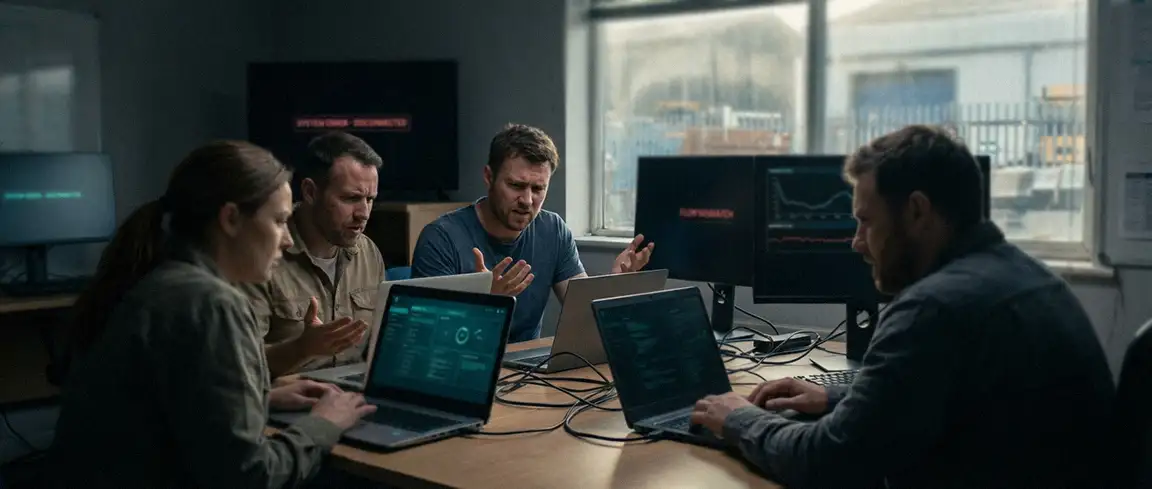
Most enterprises today are not starting from a clean, well-structured foundation.
Instead, they operate across:
- Fragmented systems
- Disconnected workflows
- Data that lacks shared context
- Decisions that are rarely captured or traceable
In this environment, even human-driven execution is difficult to manage effectively.
Now introduce autonomous agents into that same system.
Agents that:
- Act on incomplete context
- Trigger downstream changes across workflows
- Operate faster than human review cycles
Without the right controls, this does not create efficiency.
It creates amplified complexity and risk.
AI does not inherently understand consequences.
It does not feel accountability.
And it will confidently take action without full awareness of downstream impact.
This is not a flaw in the technology.
It is a gap in the system surrounding it.
The Real Problem: Execution Without a Control Layer
What McKinsey’s analysis points to-without explicitly naming it-is the absence of a critical enterprise capability:
A control layer for execution.
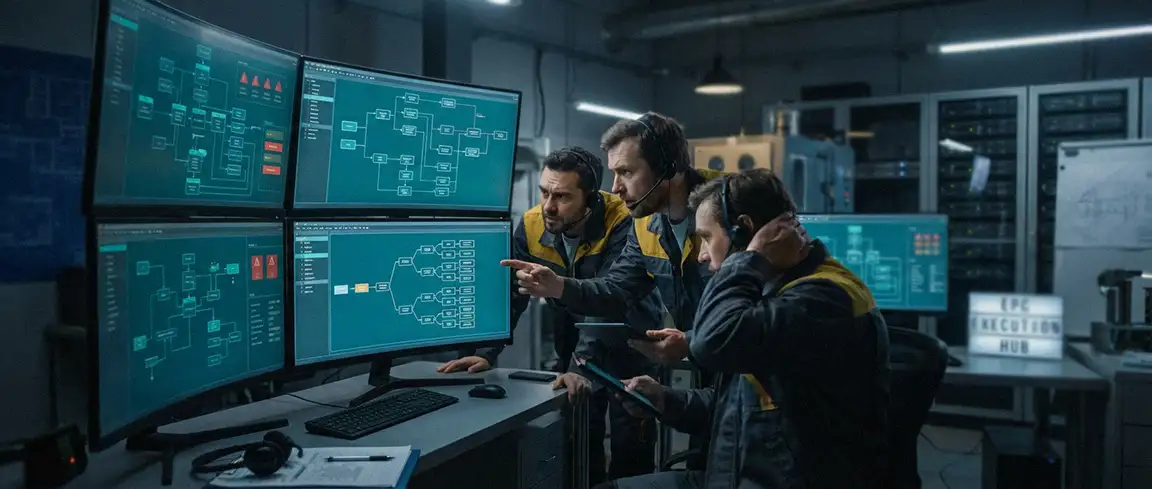
This is the layer that sits above systems, workflows, and tools, and answers fundamental questions such as:
- What work is actually being done?
- How are activities, deliverables, and decisions connected?
- What changed, and why?
- What is the downstream impact of that change?
- Who is accountable for the outcome?
Today, most organizations cannot answer these questions in real time.
And without that visibility, introducing AI agents only accelerates the rate at which decisions are made-without improving their quality.
From Systems of Record to Systems of Decision
For decades, enterprise software has focused on two primary categories:
- Systems of Record - storing data
- Systems of Workflow - managing processes
But agentic AI introduces a third, more important layer:
👉 Systems of Decision
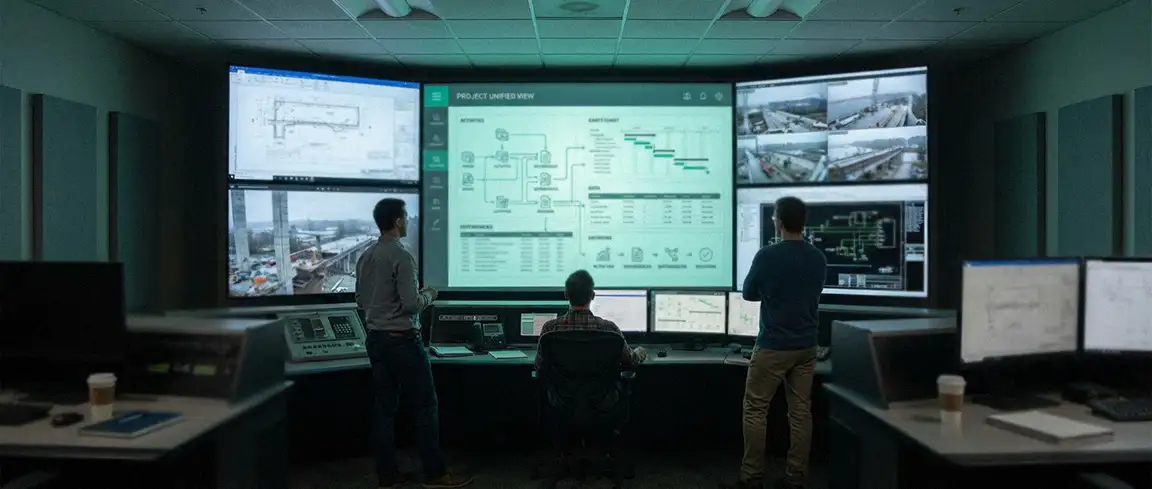
These systems do not just store or move information.
They:
- Structure context across activities, data, and dependencies
- Track decisions and their rationale
- Provide visibility into how execution is evolving in real time
- Enable humans to remain accountable, even as AI takes on more action
This is where the next generation of enterprise value will be created.
Because in a world where machines can act, decision quality becomes the ultimate differentiator.

The Future of Work: Human Accountability in an AI-Driven System
One of the most important-and often overlooked-realities ofAI is this:
AI does not carry responsibility.
It can recommend, automate, and act.
But it does not own the outcome.
That responsibility still sits with people.
Which means organizations must design systems where:
- Humans remain in control of critical decisions
- The reasoning behind actions is visible and traceable
- Execution can be monitored, adjusted, and governed in real time
This is not about slowing AI down.
It is about ensuring that speed does not come at the expense of control.

Where Execution Breaks Without Control
We are at an inflection point.
Many organizations are still focused on what AI can do:
- Automate tasks
- Generate content
- Accelerate workflows
But the real question is shifting:
👉 How do we ensure AI is doing the right work, in the right way, at the right time?
Those that answer this question will unlock meaningful productivity gains.
Those that do not will face:
- Increased rework
- Hidden risks
- Loss of visibility into execution
- And ultimately, a loss of control
The Next Category of Enterprise Technology
Agentic AI is not just a feature upgrade.
It is a structural shift in how work happens.
And with that shift comes the need for a new category of technology:
A system that:
- Connects work across silos
- Structures context in a meaningful way
- Tracks decisions and their impact
- Enables both humans and AI to operate within clear boundaries
In short, a system for how work is actually decided andexecuted.
Final Thought
The organizations that succeed in the age of agentic AI will not be those that deploy the most agents.
They will be the ones that build the strongest control over how those agents operate.
Because in the end, the goal is not just faster execution.
It is better decisions at scale.
Design for Decisions, Not Just Automation
If you’re exploring how to bring structure, visibility, and control to AI-driven execution, now is the time to rethink your approach.
👉 Start building the layer that connects decisions, context, and execution-before complexity getsahead of you.